As an Amazon Associate I earn from qualifying purchases. At no additional cost to you, this post contains links that I may receive commissions for upon qualifying purchases. To view my full Affiliate Disclosure Page please click here.
Swedish Lapland covers the northern most section of Sweden and is the part of the country that is situated within the Arctic Circle. It’s a place where in the height of summer the sun never sets and in the depths of winter the sun doesn’t rise. You may ask yourself, ‘why would someone want to travel to such a place?’ Swedish Lapland is home to beautiful Arctic tundra, the northern lights, stunning lakes and mountains, the Indigenous Sami people, incredible wildlife and of course, the famous Ice Hotel. So maybe the question you should ask is, ‘why wouldn’t someone want to travel here?’
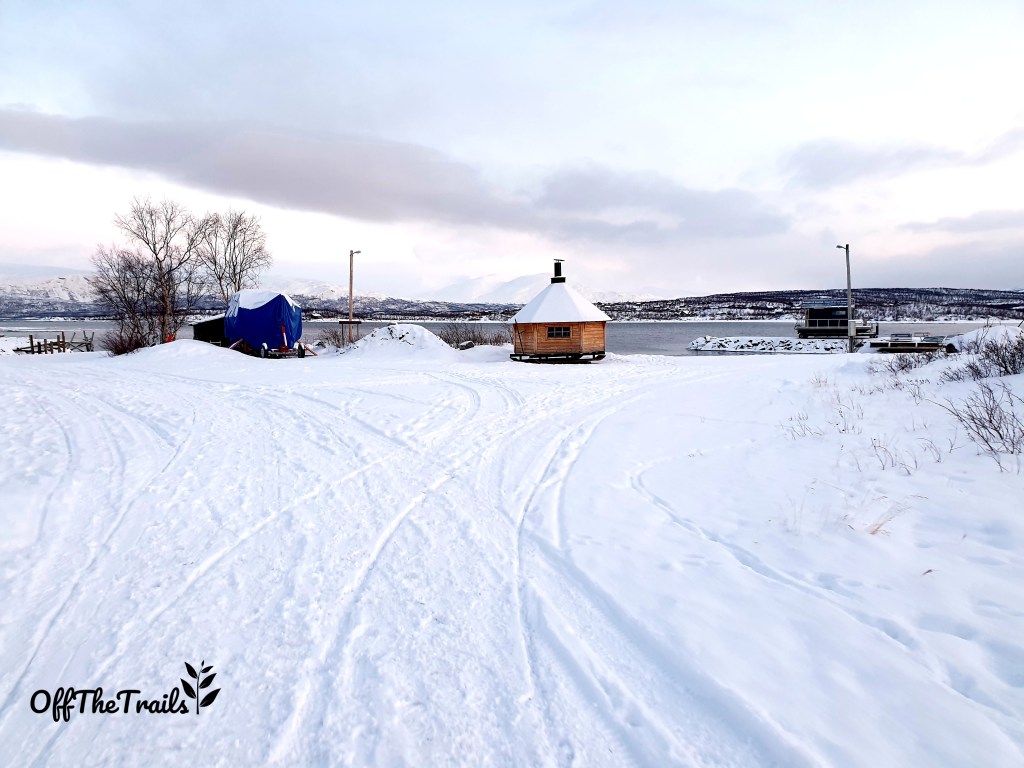
This post documents my experience in Swedish Lapland during the depths of winter, at a time where the sun only crept above the horizon for an hour and a half per day and the temperature barley rose above minus 15 degrees Celsius (-15°C). Endless snow covered the landscape and the lakes glistened with ice, Lapland was in a deep freeze and I was lucky enough to be there in the midst of it.
How I Got There
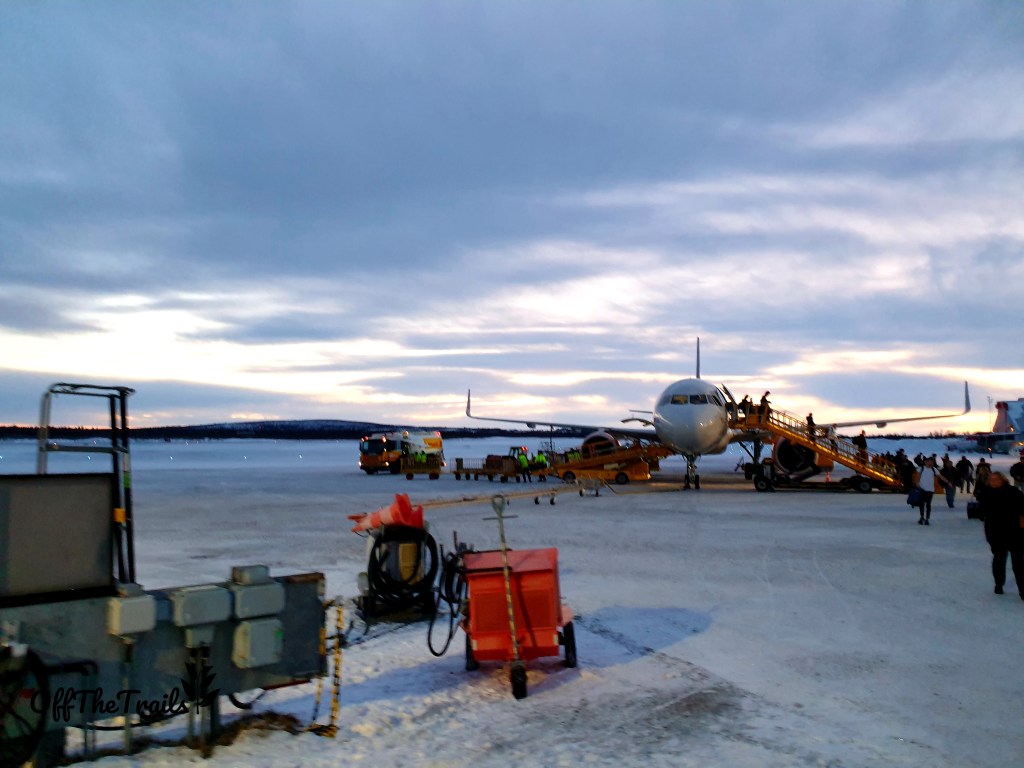
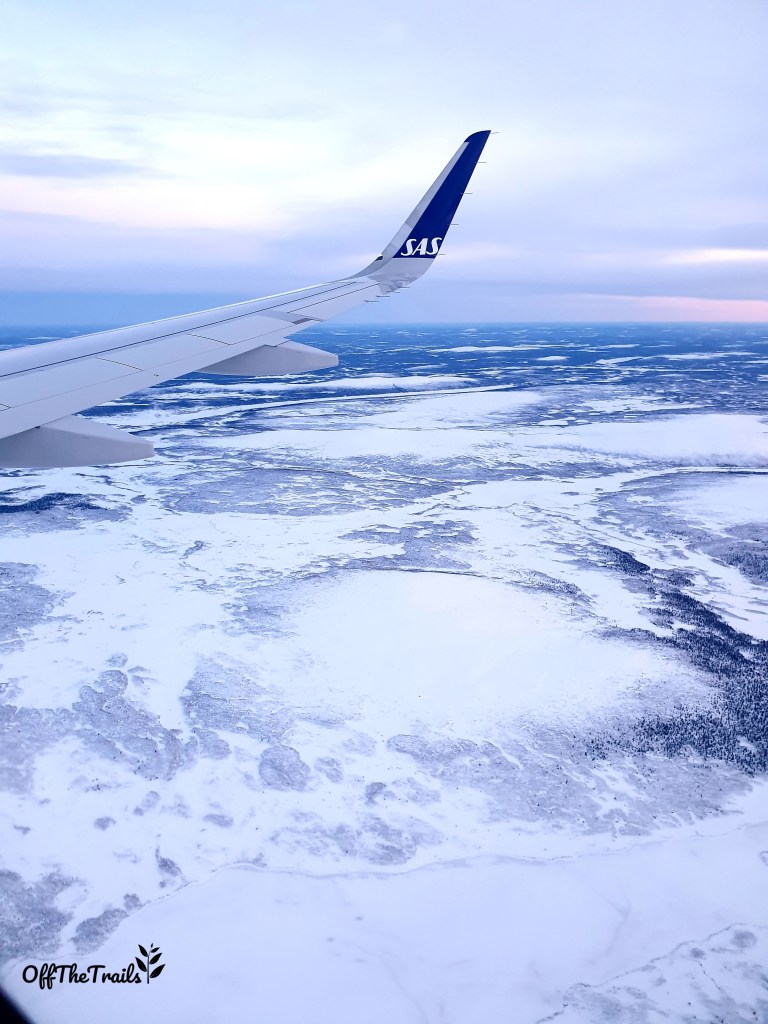
I travelled to Lapland at the beginning of December 2019. I was living near London, England at the time and decided to take the journey in two trips. My first reason for this was to bring travel costs down as at the time it was cheaper to use two different flight providers and change over in Stockholm. The second was to explore Stockholm for a few days and enjoy the ‘warm’ (-4°C) weather before entering the Arctic Circle. I flew from London Stansted to Stockholm Skavsta and stayed in central Stockholm for three days, I then took a flight from Stockholm Arlanda to Kiruna Airport and transferred via coach to the northern most city of Sweden (Kiruna).
The City of Kiruna
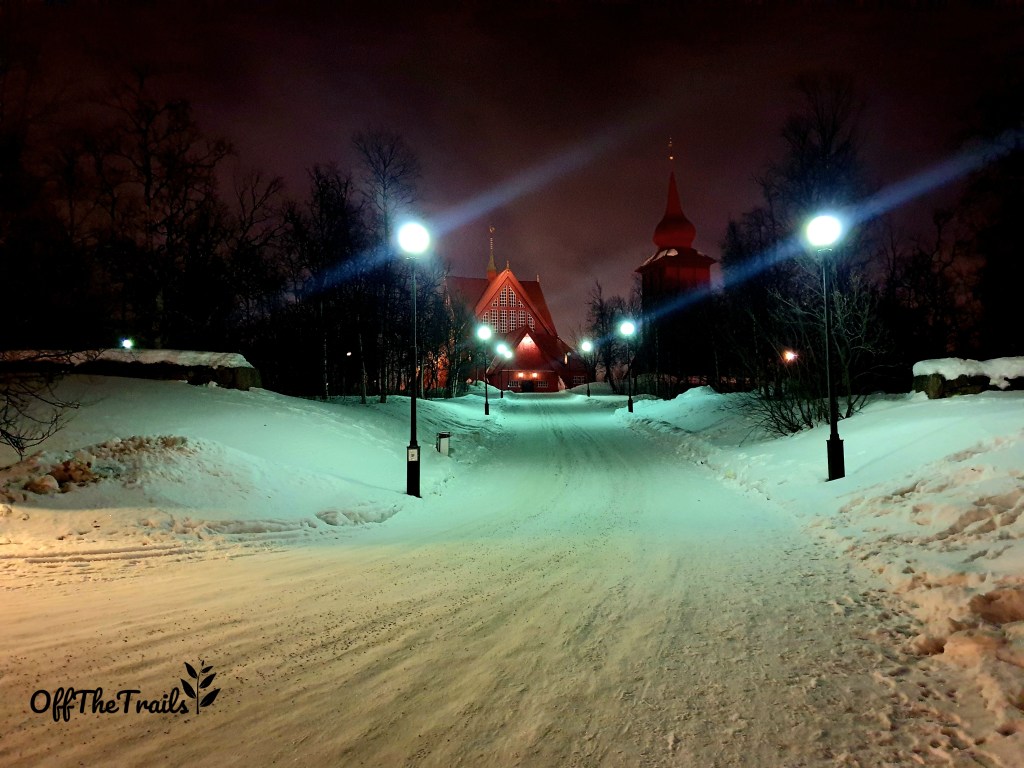
Kiruna is the northern most city of Sweden. It exists because of its rich iron ore mine however, the city is a disaster of its own making. You see, over the course of a century, the mining industry has dug so many tunnels in the area that the ground beneath Kiruna is at risk of collapse. The current city is sinking therefor another development is being built 3.2 kilometres away, with aims of moving all 22,000 of its residents to the ‘new city’ as soon as 2035.
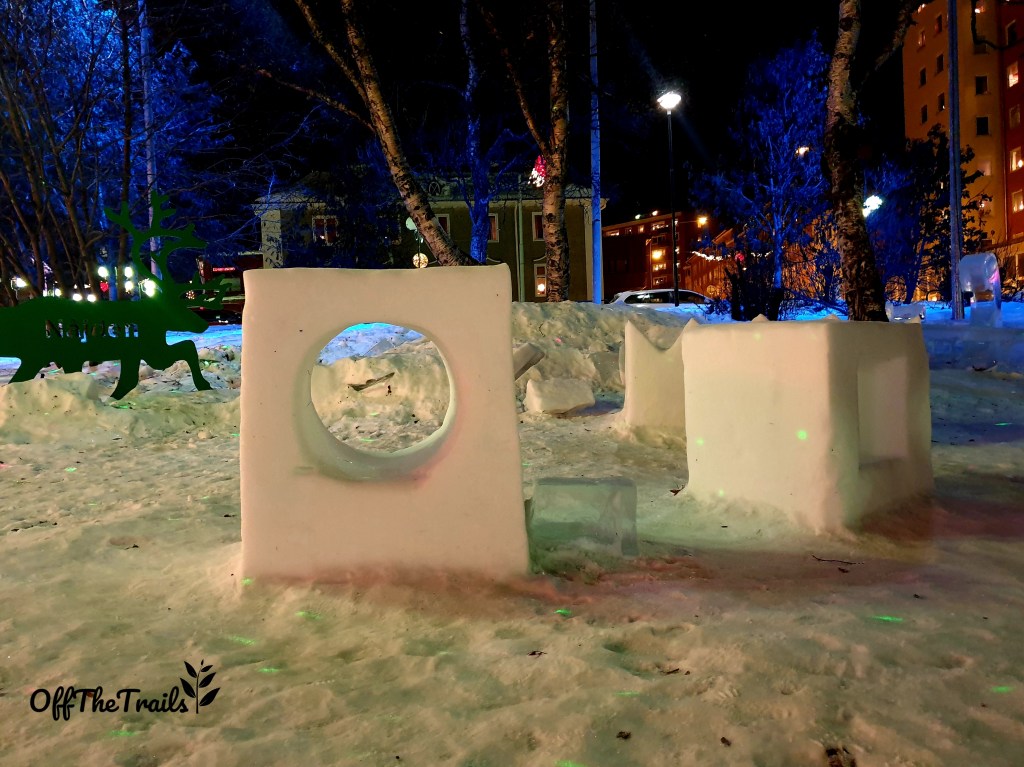
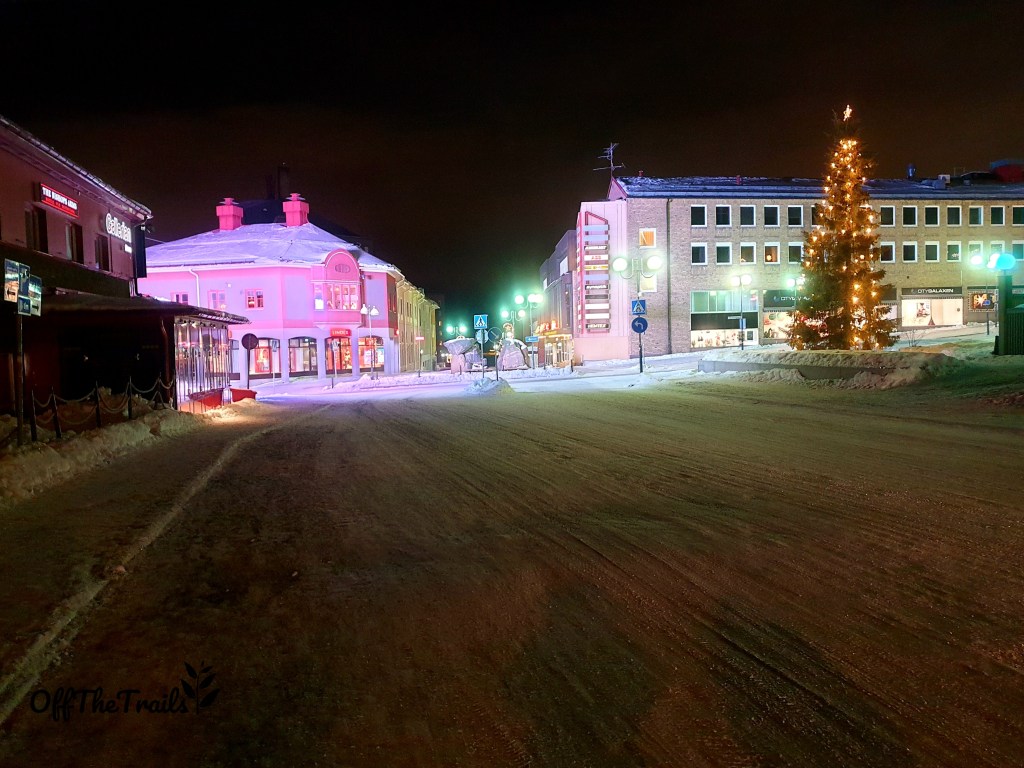
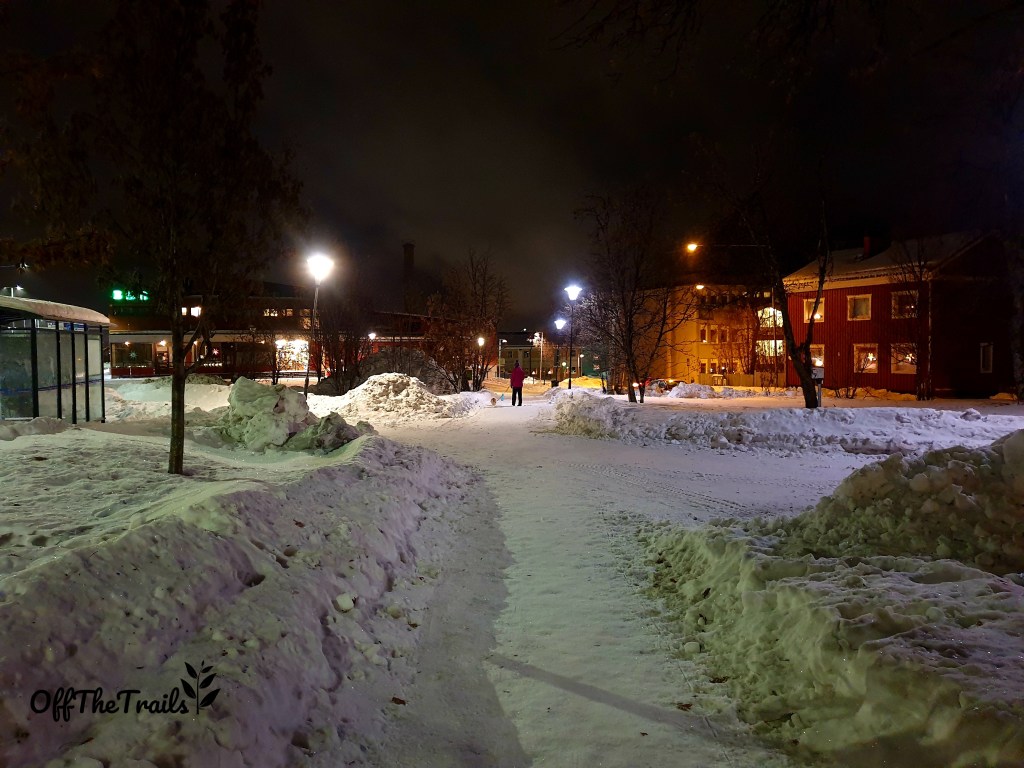
I stayed at the Scandic Hotel in Kiruna and it served my purpose well. I had a buffet breakfast every morning included in the price, and the bar was stocked well and provided a nice atmosphere for the evenings. In the centre of Kiruna there are two bars, one authentic-feeling older style pub and one more modern establishment, they both served lovely food and felt very welcoming. Other restaurants were lacking but there was a tapas place and a few pizza and kebab restaurants which is more than enough to ask for considering Kiruna’s population is so small.
The Ice Hotel
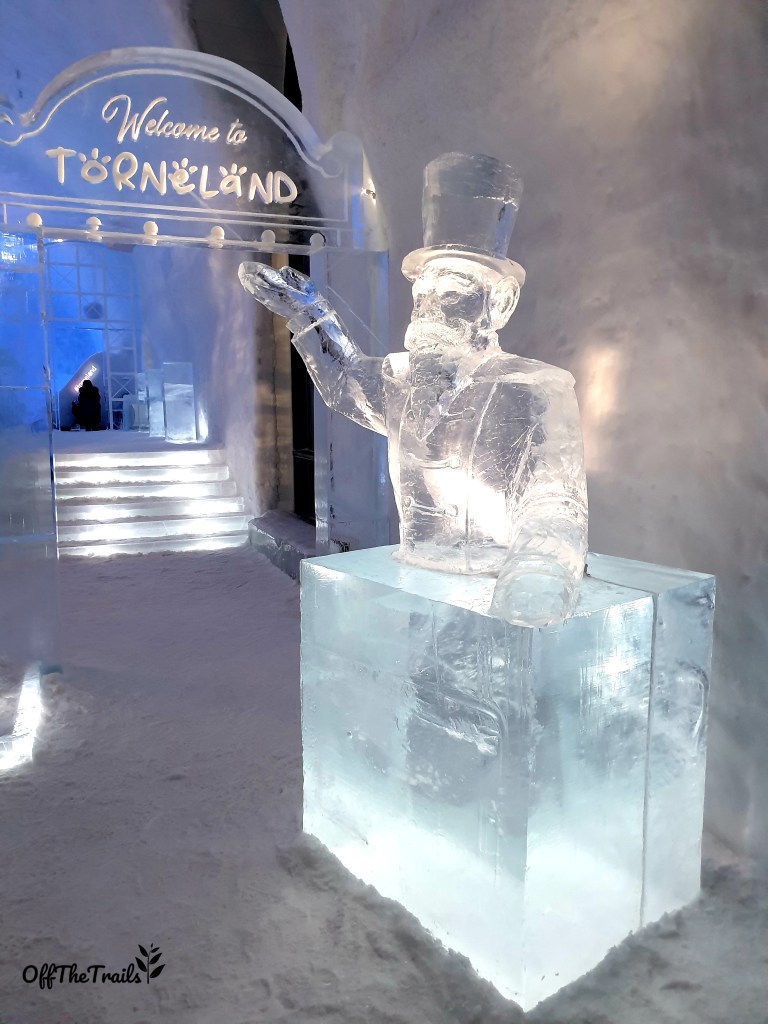
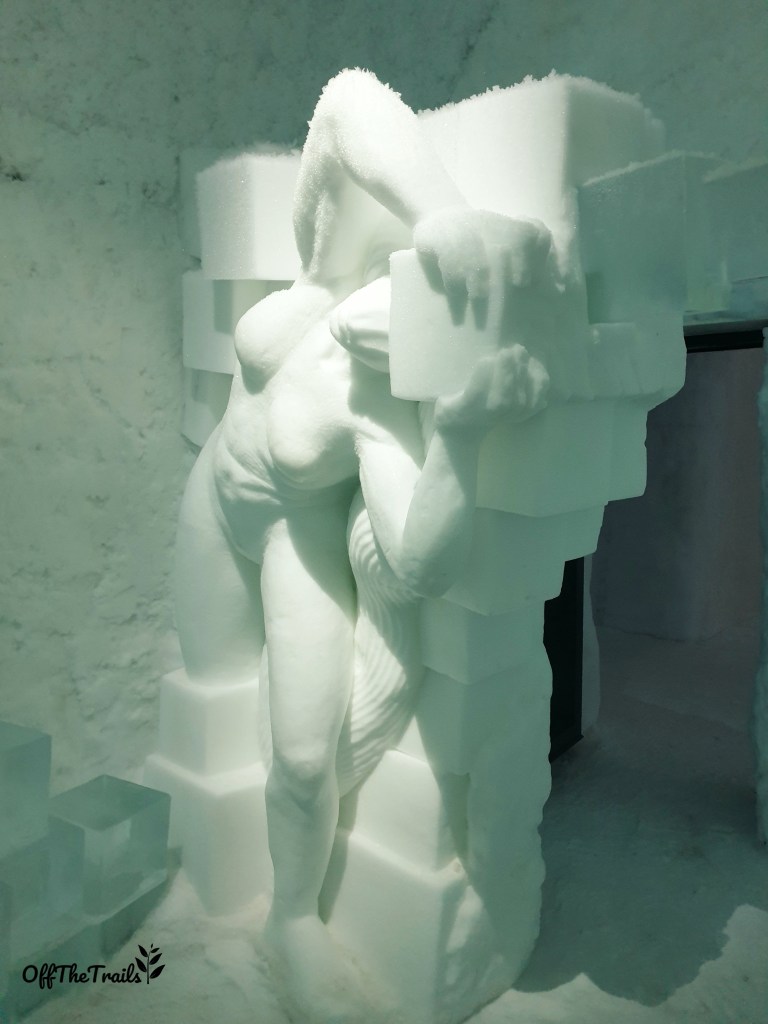
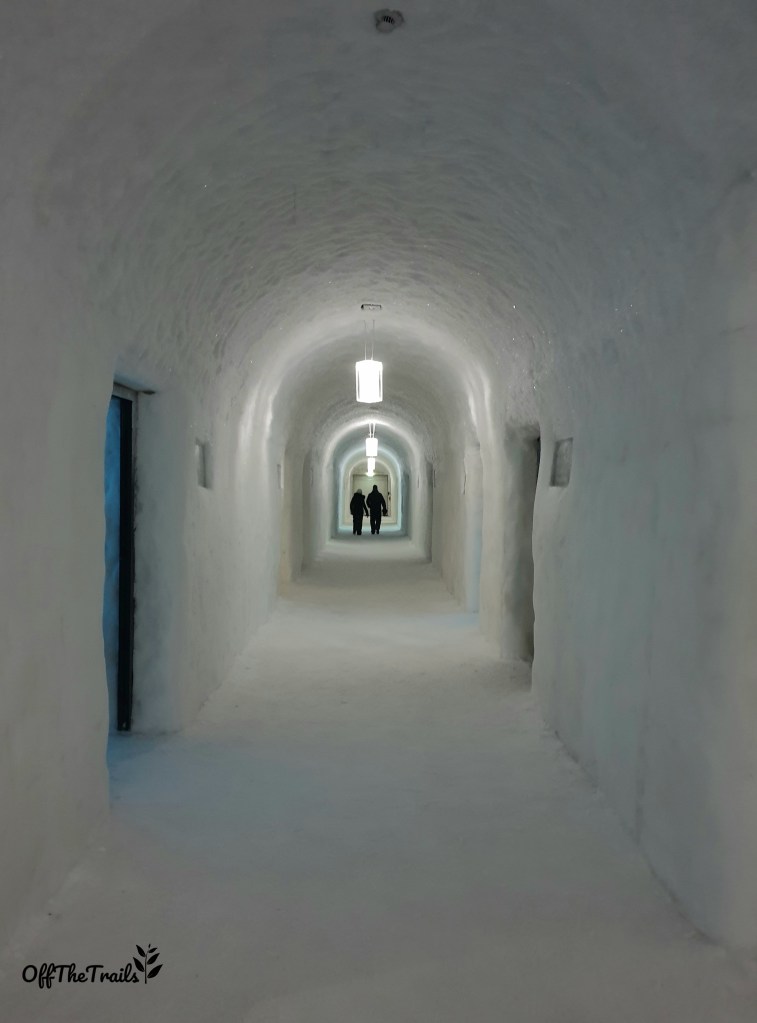
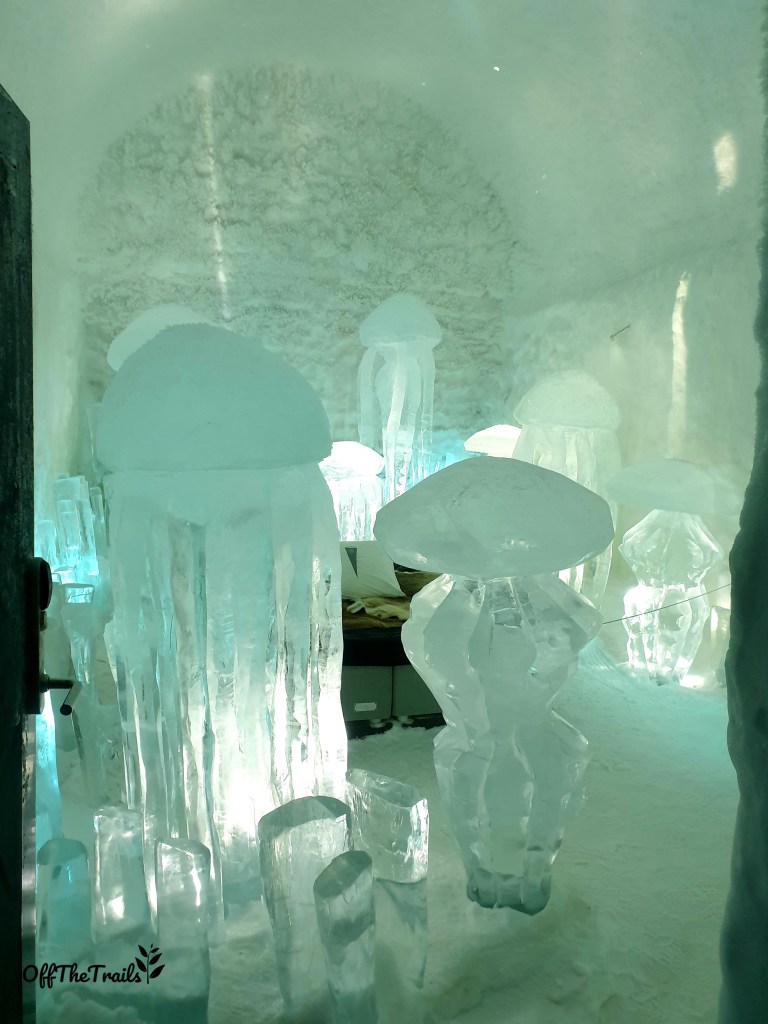
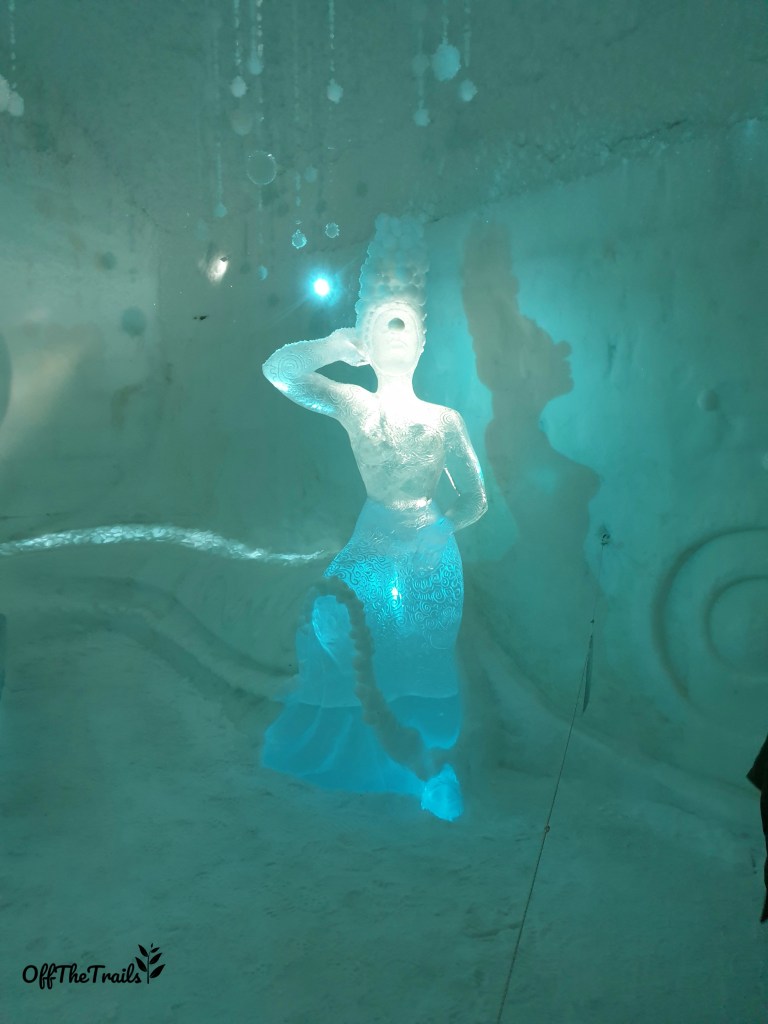
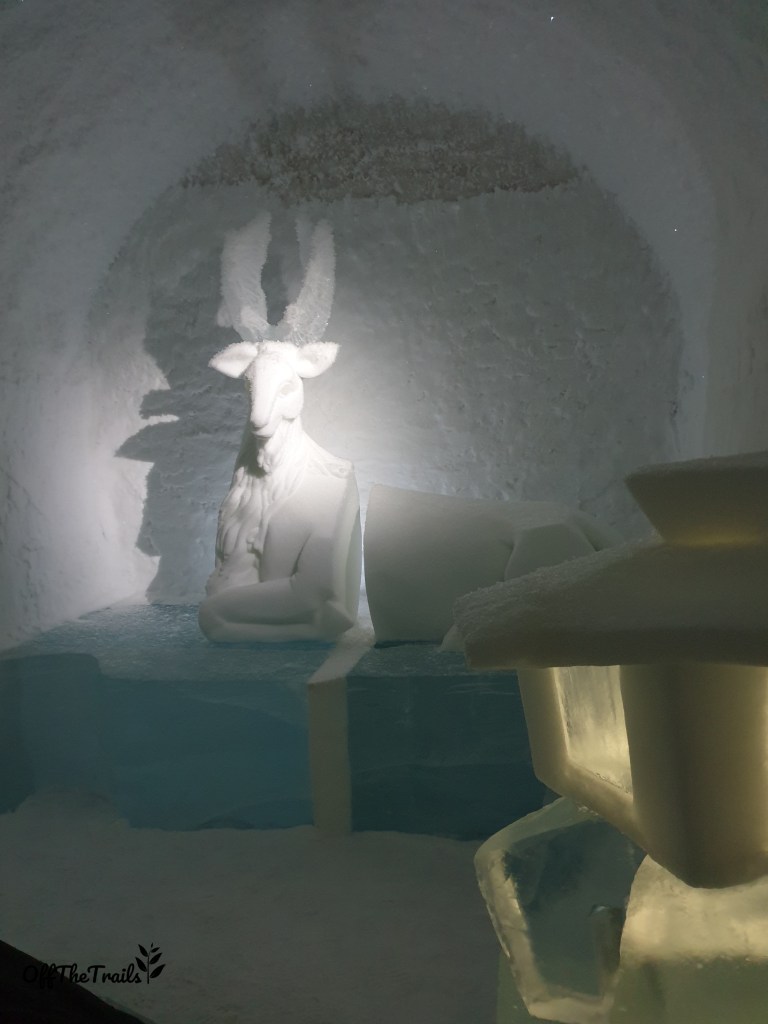
The Ice Hotel in Jukkasjärvi is a place of unimaginable design and beauty, this amazing place gets rebuilt every winter in different forms. Its bar and hotel rooms are unique art pieces made from ice and snow that inevitably thaw out once Lapland’s long winter ends. The rooms are built from Ice sourced from a nearby lake that gets cut with large chainsaws, removed and transported to the hotel using snowmobiles. The Ice Hotel really did leave me speechless, the extent of detail in some of its designs were unfathomable, you really do appreciate the hard work that goes into every last sculpture in this place, it truly is a must see!
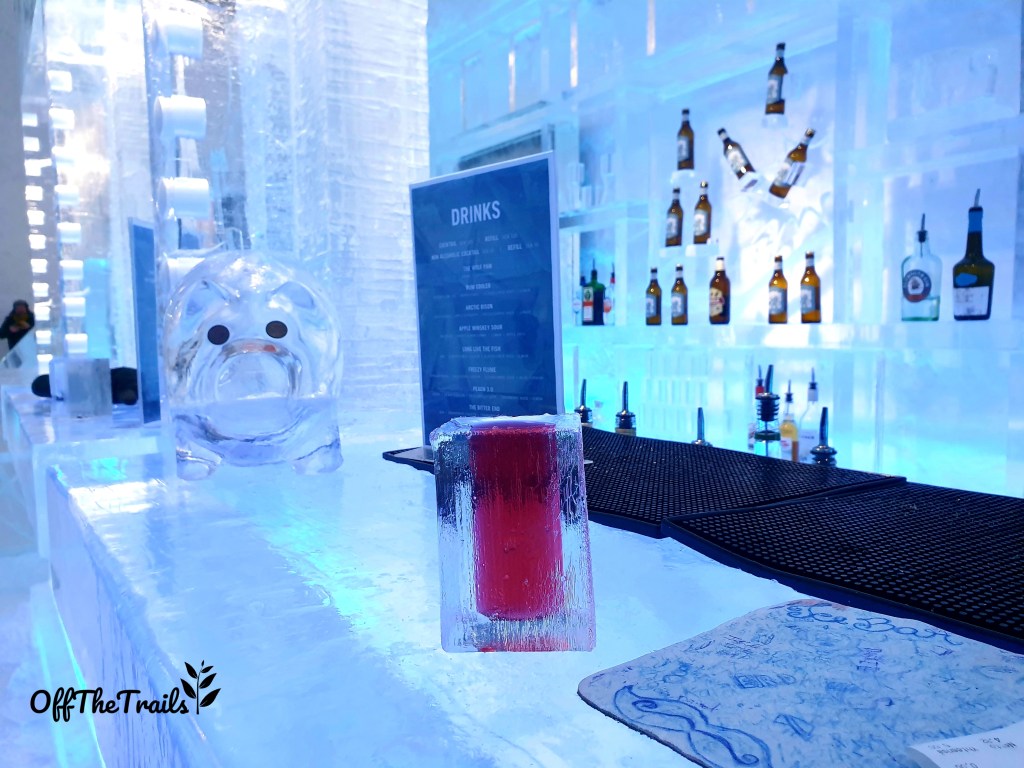
When you first walk into the hotel you are met by the Ice Bar, everything is made from ice and snow in here; the bar, liquor shelves, chandeliers, seating areas and tables, even the glass you drink from is made from a cube of ice. A couple of refreshing drinks at the bar was a must for me and with room temperature averaging around -5°C it was nice and warm in relation to the outside temperature. After two or three icy cocktails I proceeded to explore the hotel rooms, each room is unique and created by different artists, it was a wonderful experience viewing them all even though I didn’t stay the night.
The Native Sami Camp
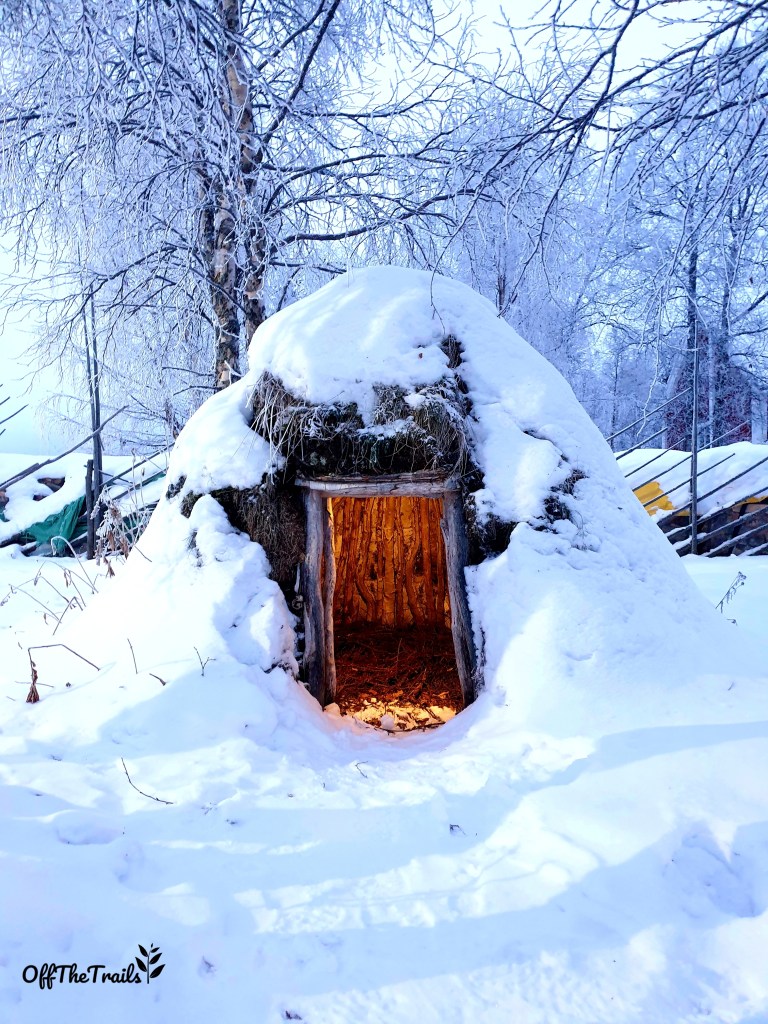
The native Sami camp in Jukkasjärvi is a great attraction where you can experience how the indigenous Sami people live. When you arrive, you can buy your tickets from the counter inside a yurt-like building at the front of the site. Here you can also buy a bag of lichen to feed the reindeer. They have a replica of a traditional Sami village which hosts as a museum to give an insight into the lives of the Sami people. The Kåta and Lavvu (the traditional tents that are similar to a tipi in shape) hold interesting notice boards inside explaining the culture and lifestyle of the Sami.
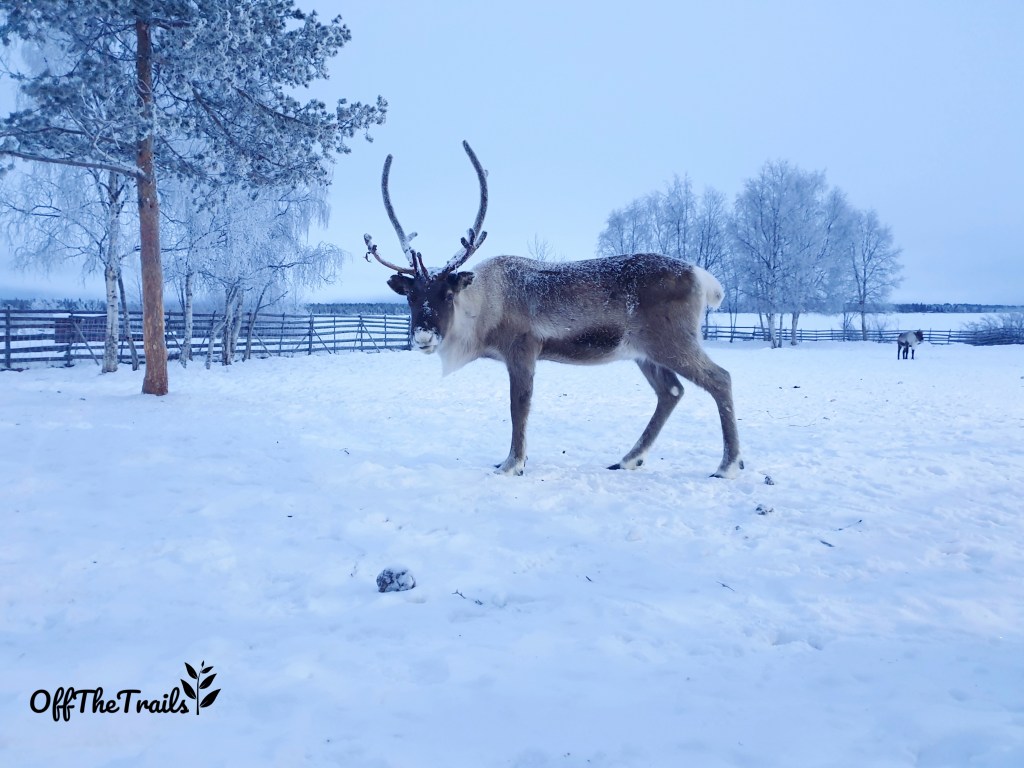
Once you walk through the village you can enter a gate that leads to a large reindeer paddock. They are very tame and used to tourists coming in and out to see them. You can stroke the reindeer, but you mustn’t touch their sensitive antlers, this will distress the animal as the antlers are full of nerve endings to alert the deer of any damage during their growth period. If you purchased a bag of lichen in the yurt the reindeer will be very keen to be your friend! As soon as they see the lichen (a reindeer’s favourite snack) they will come running over to get a piece of the action.
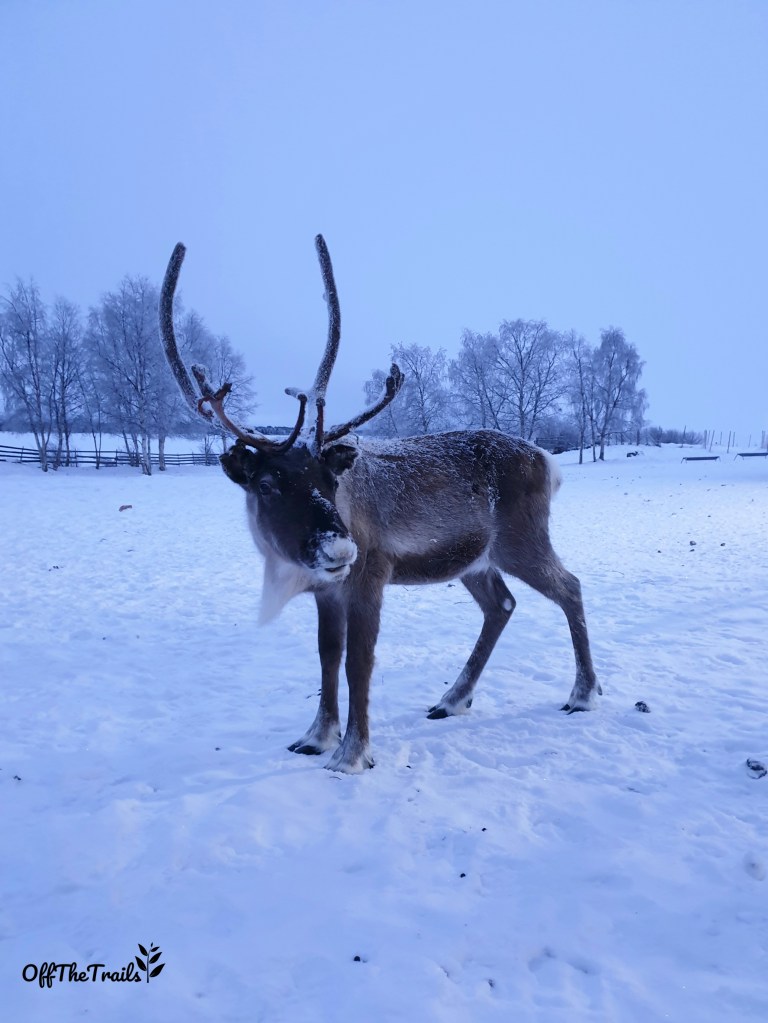
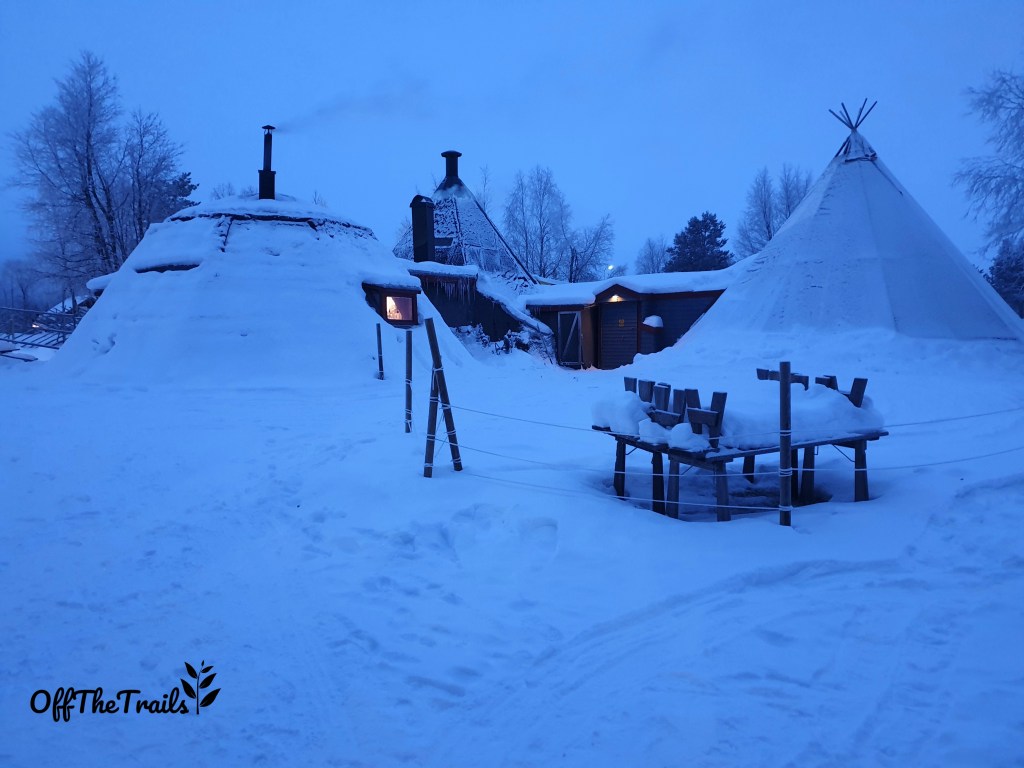
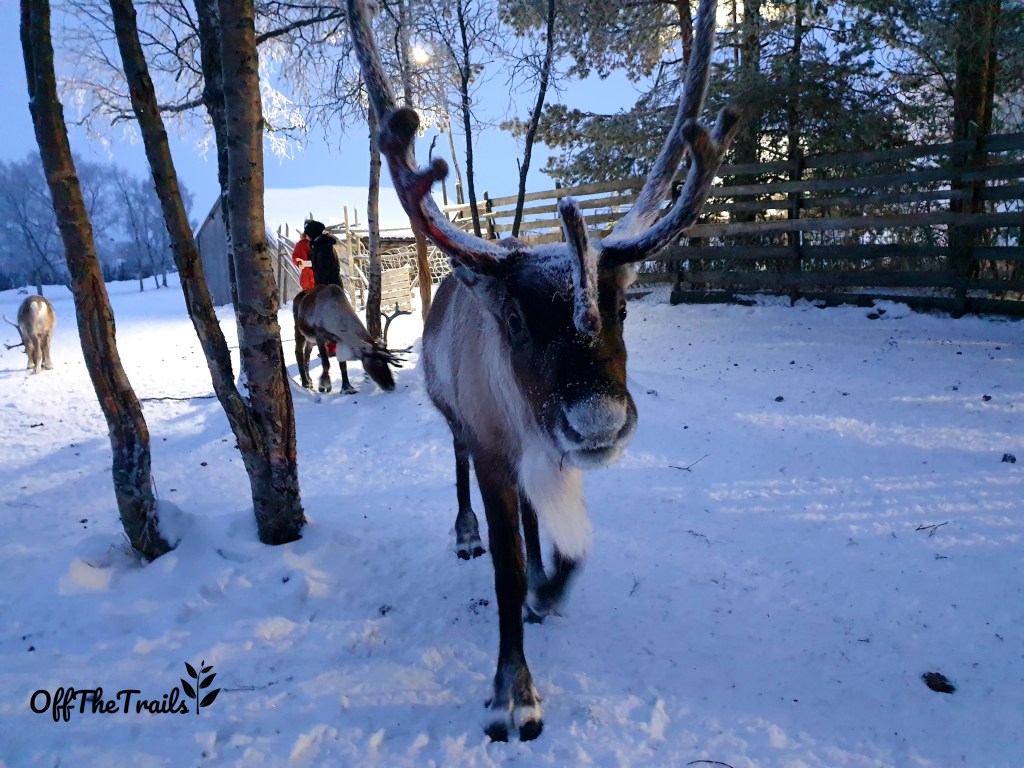
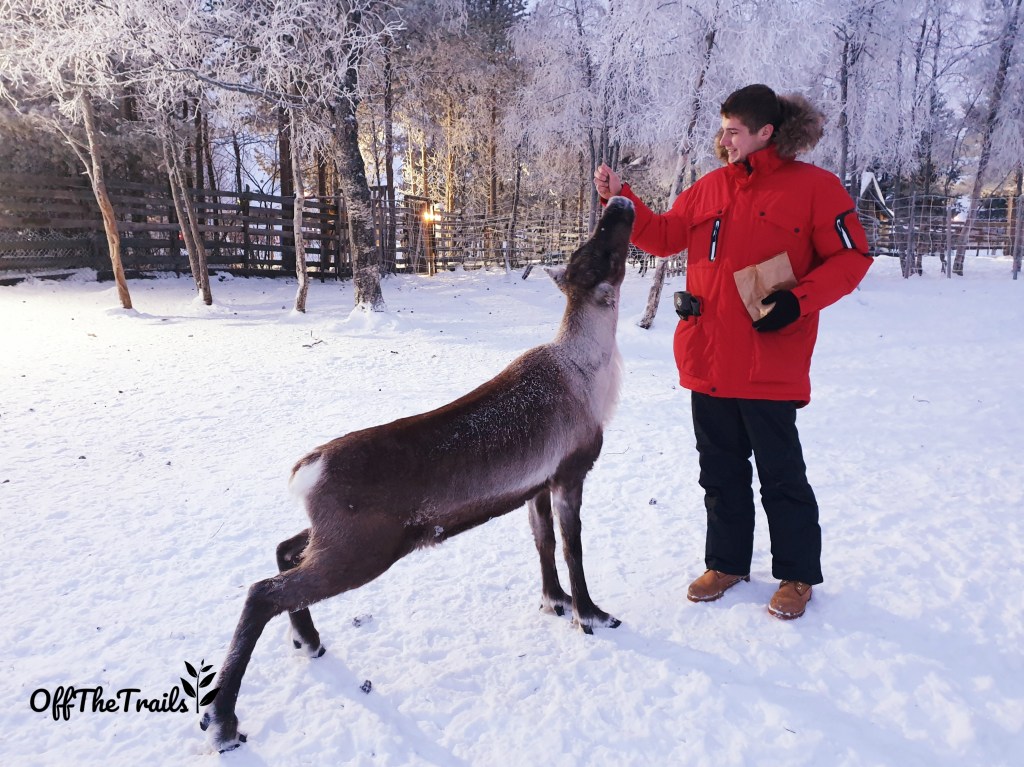
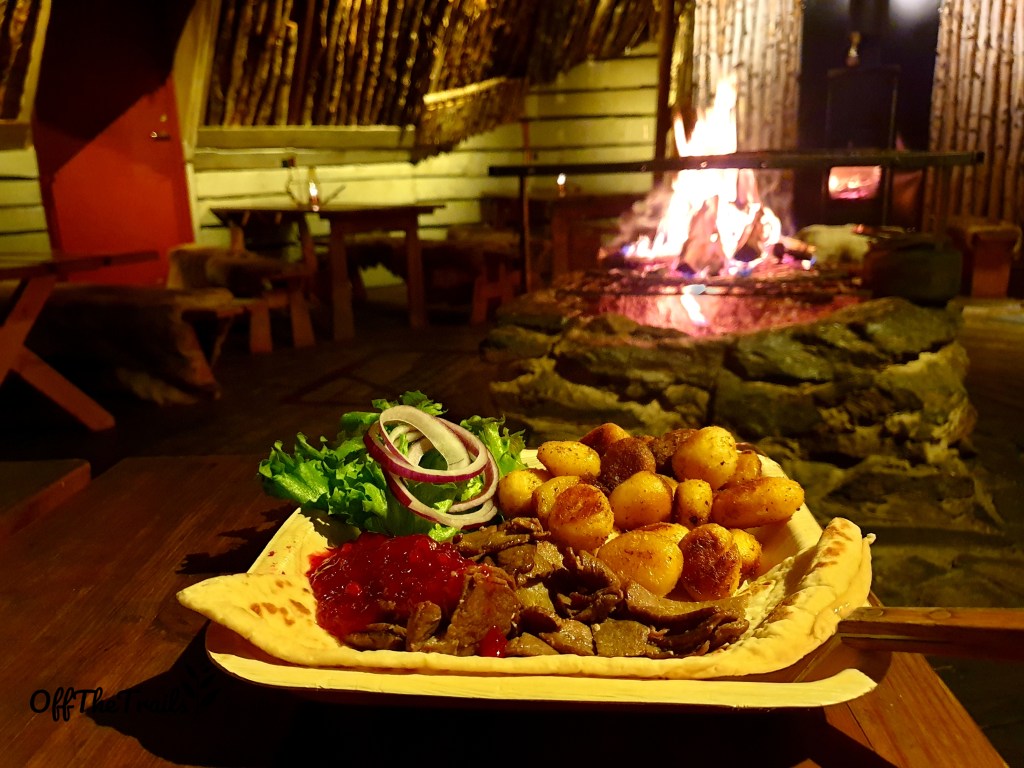
After feeding the reindeer herd I went inside the yurt to wash my hands and warm up by the fireplace, they also have some very useful racks near the fire to hang your gloves on to dry. In the centre of the yurt’s main room they have an open fire to sit back and watch while you look through the menu or relax with a warm coffee. While I was there, I thought it would be rude not to order a reindeer dish, even if I did just feed the adorable creatures outside. Once I ordered my food, the chef came out of the kitchen with a pan full of meat and proceeded to cook it up over the open fire in front of me, the smell was incredible. Once the meat was cooked the chef left with the pan and came back with a plate of reindeer meat, tunnbröd (a traditional Swedish flat bread), fried potatoes, lingonberries, finished with a side of salad. The food was divine and the setting I ate it in was perfect, the place had a homely feel to it and eating such a hearty meal by firelight really warms the soul.
Abisko
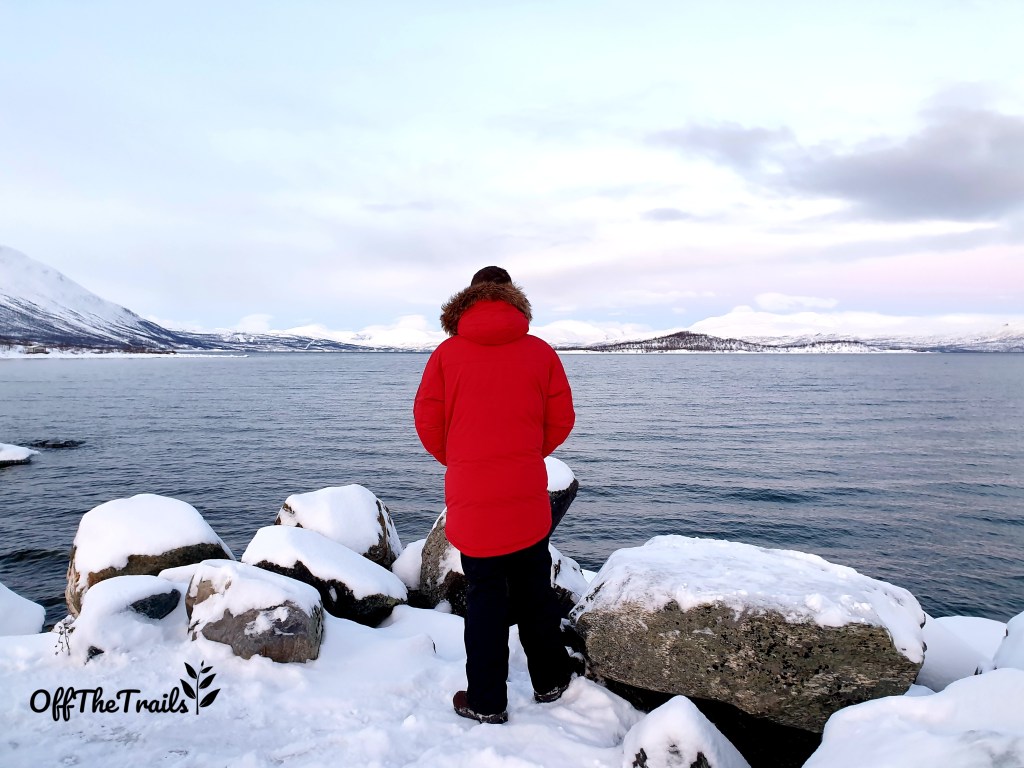
Abisko is a small settlement located 150 miles into the arctic circle, it has a tiny population of around 85 people. It is the best place in the world to see the northern lights although I didn’t manage to see them while I was there due to far too much cloud cover and snowy weather. Luckily, I didn’t travel to Abisko for the lights so I wasn’t too disappointed when I didn’t see them however, I will be taking a trip back there next winter to search for the breath-taking aurora.
I travelled to the settlement via the arctic train that runs through the tundra between Kiruna and Abisko. The train-line was originally constructed for the mining operations in the area, but a commercial service now runs as well. The train I boarded runs twice a day, was formed of less than 10 carriages and takes around an hour and a half to reach Abisko. The scenery it passes through is beautiful and on the journey up there I was lucky enough to watch the sun rise above the horizon for its short appearance of the day.
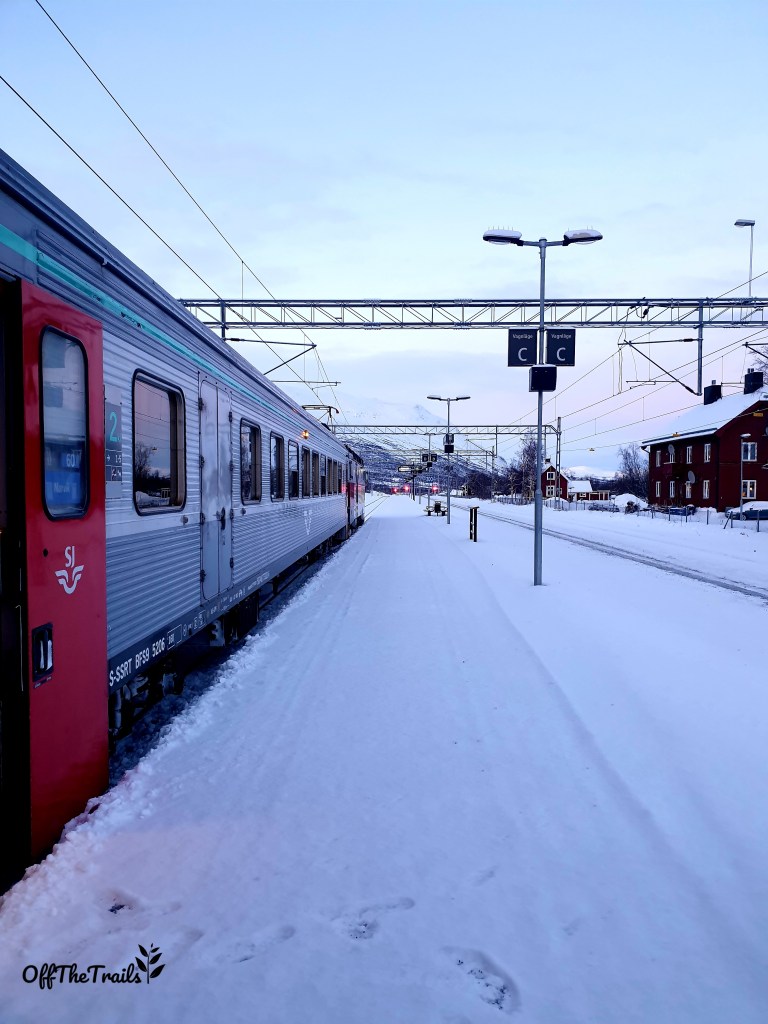
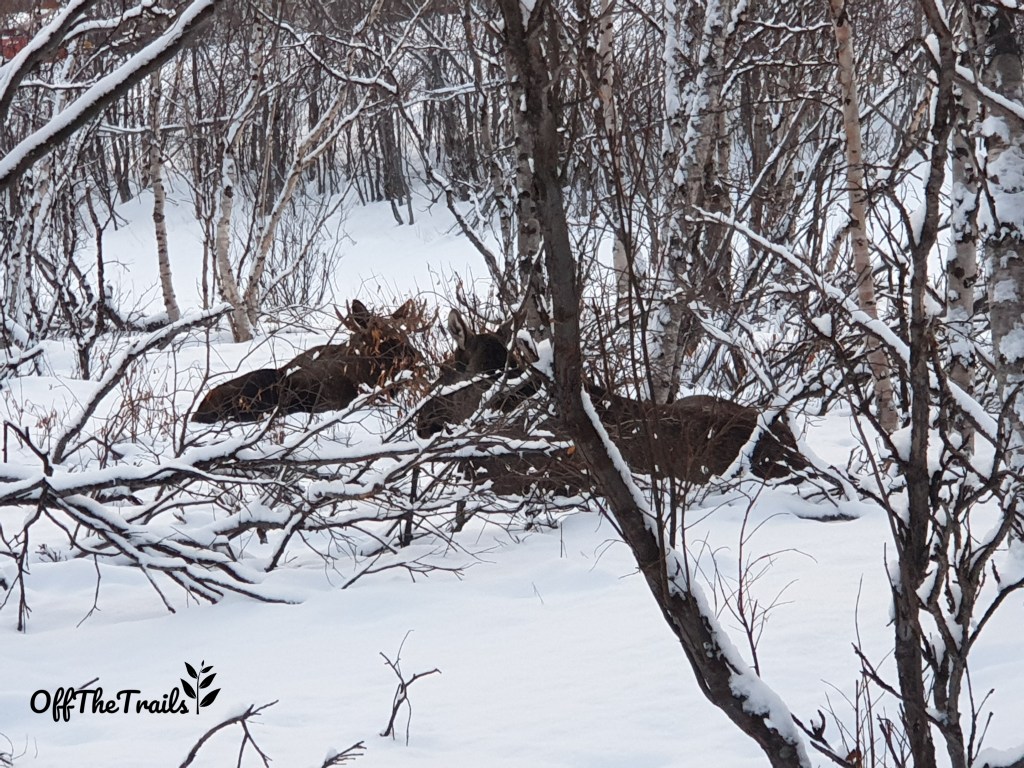
Once I arrived in Abisko I was in a rush to see as much scenery as possible before the light faded. I got off at Abisko station rather than Abisko Östra (the station near the tourist centre) to stop at a small service station for some trail snacks and to walk down to the large lake in the area. On my walk down there, I managed to spot a moose and its calf resting in the undergrowth, these were the first moose I’d seen at that time and I was astonished at their impressive size.
My walk continued down a picturesque, snowy trail through the wilderness and by the time I arrived at the lake my eyelashes were frozen and my hands were icy cold but that didn’t take my attention off the stunning view that stood before me. The feeling of cold quickly left my body as I explored the snowy banks of Torneträsk, the views were spectacular. The mountains glistened in white and the sky was lit up with pink and blue from the polar stratospheric clouds above. An almost deafening silence surrounded me as I enjoyed the view, you could say I’ve never heard silence like it, perhaps it was something to do with the sound deadening qualities of the snow filled surroundings.
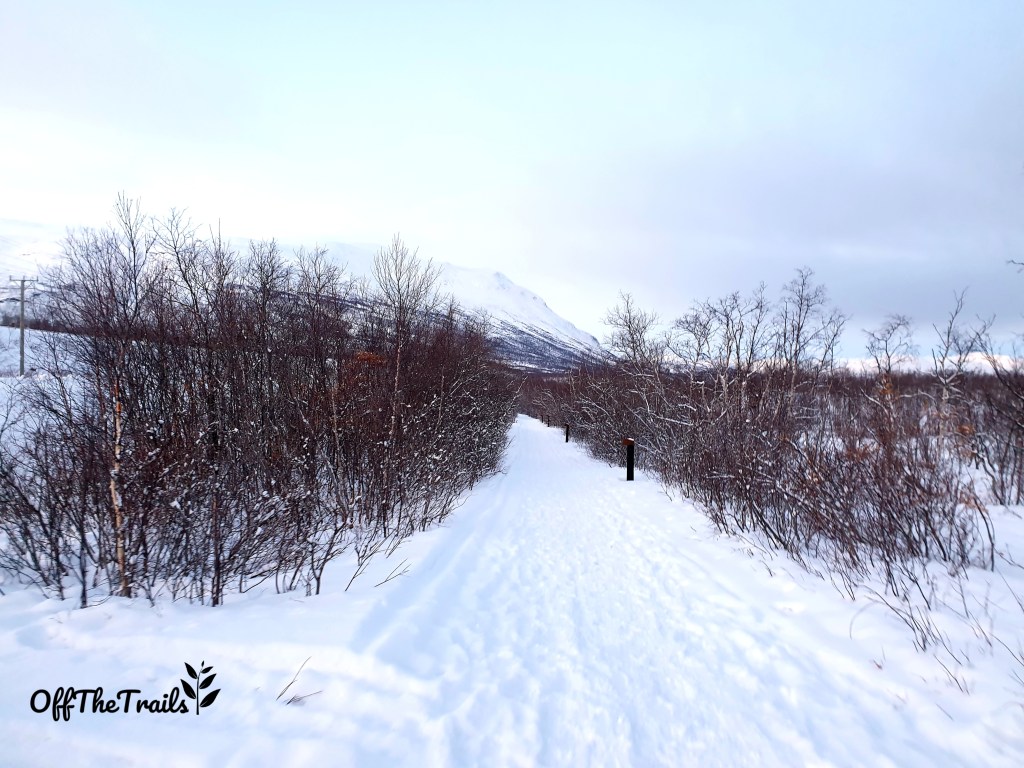
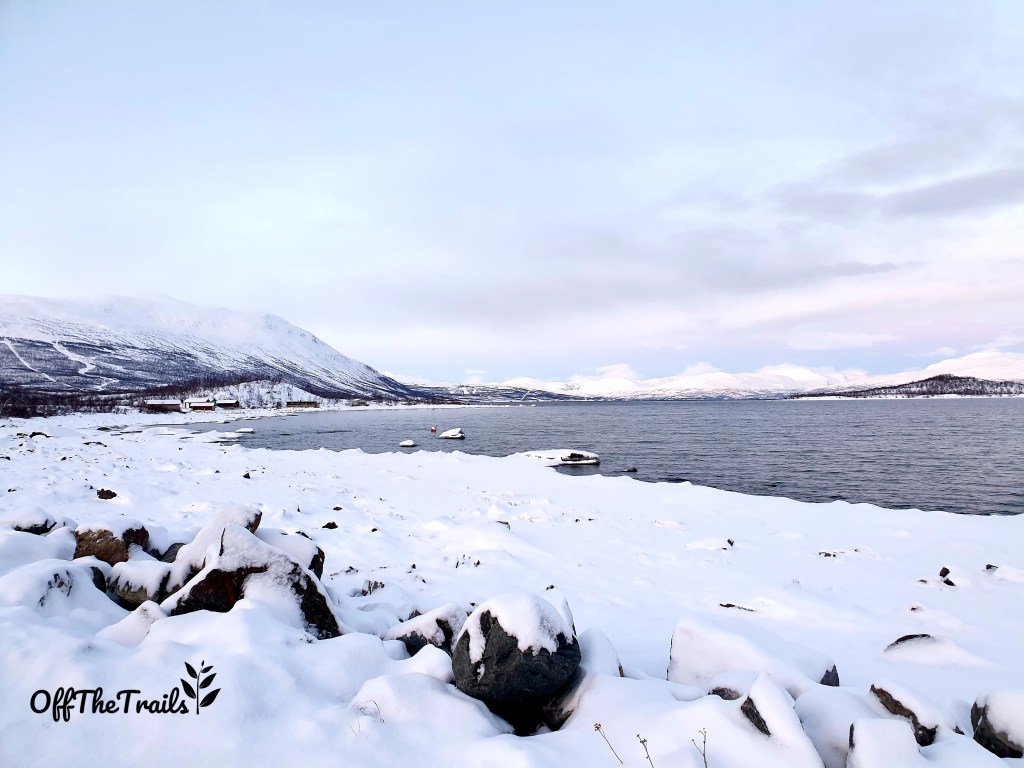
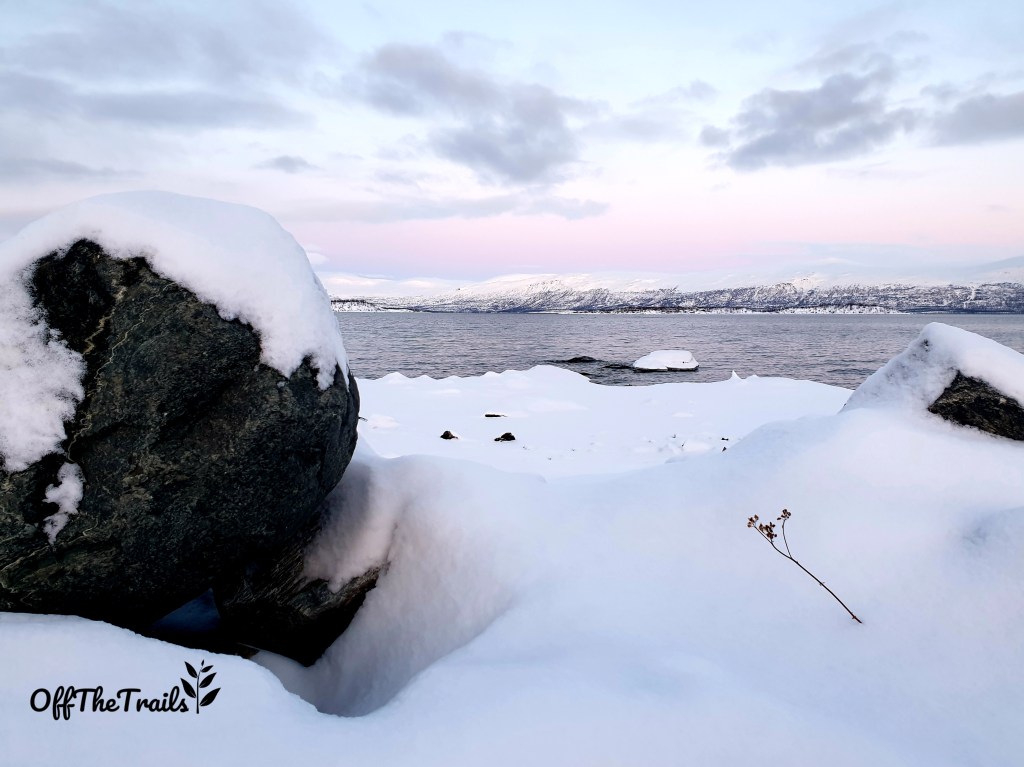
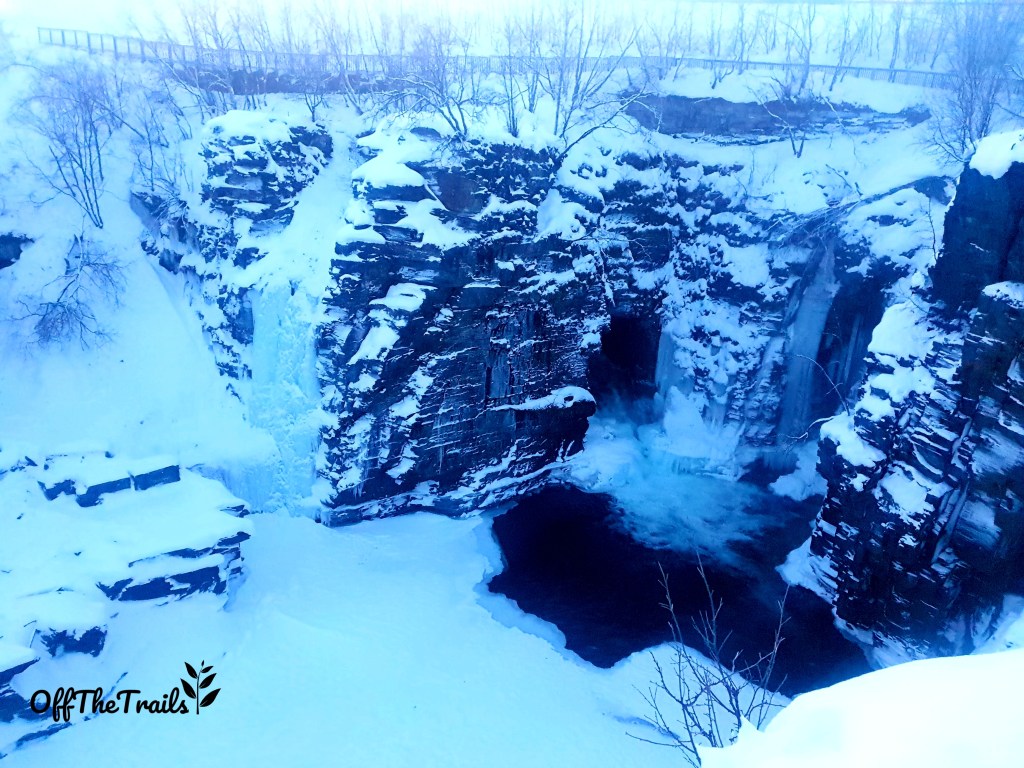
Once I’d had my fill of the view, I walked back up the trail to join a path that took me over a hill to the Abisko tourist centre. I stopped for some food and a coffee before heading out to see the frozen waterfall and river that feeds Lake Torneträsk. The Tourist centre is well equipped, serves warm food and the dinning area has large glass windows with a great view of the lake and mountains.
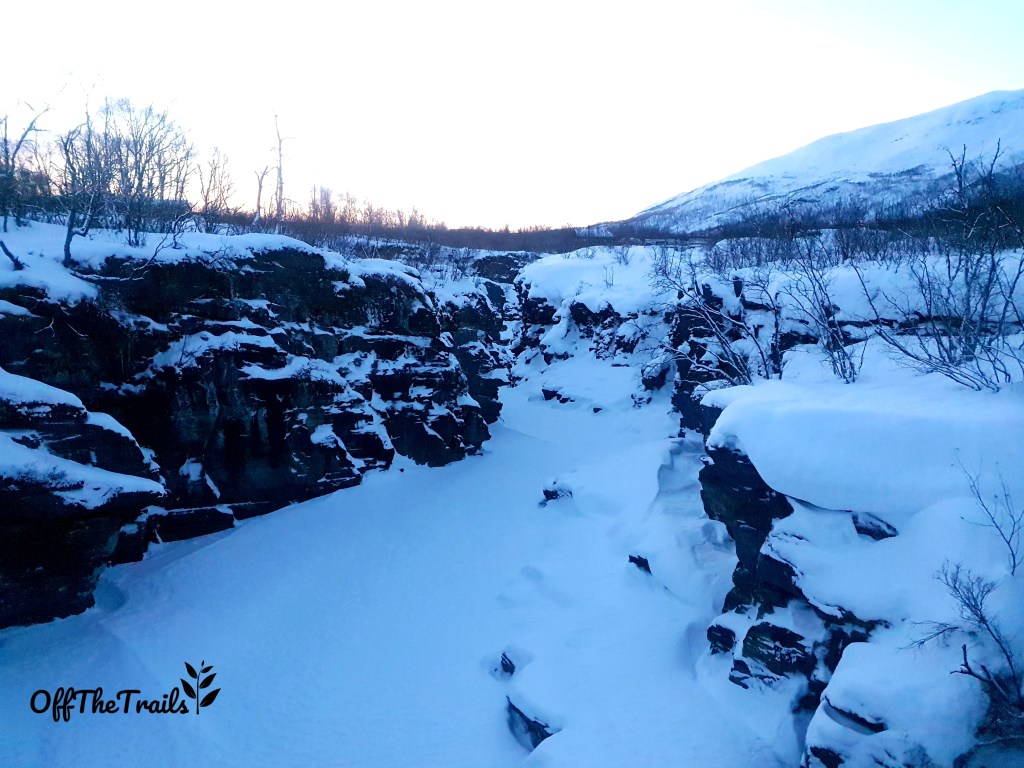
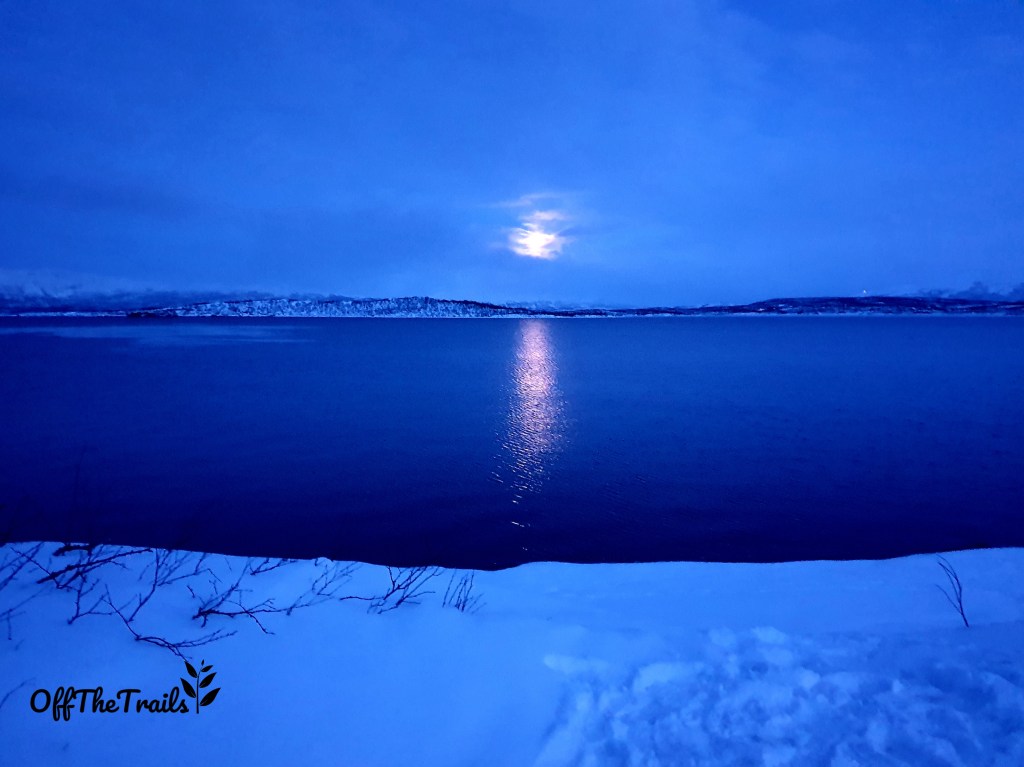
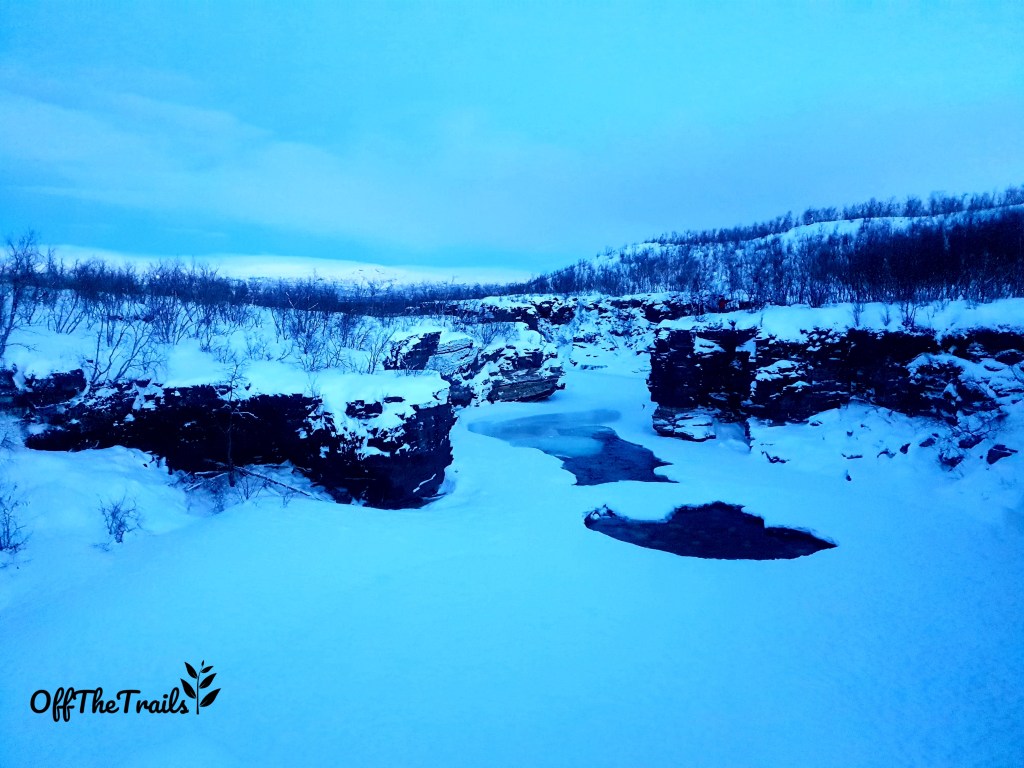
I Walked one of the easier trails while I was there to see the waterfalls before I lost the little daylight that I had. Before the light faded i had a lovely walk and got some great views from the platform on the falls and a bridge that crossed the frozen river. During the dark hours I decided to take a nice walk down to a beach on the lake where the moon reflected perfectly on the still, calm water.
Before I knew it, the time had flown by and I had to rush back to the station to catch my train back to Kiruna. Although my trip seemed short, I had a great experience there, but I do plan to travel back to Abisko next winter to stay, hopefully catch the northern lights and explore more of its untamed wilderness.
 Off The Trails
Hello. Excellent post. Thank you.
This is the Arctic Circle in winter in Finland:
Reindeer rides and Santa
As you saw it is wonderful lace where you can have reindeer rides and meet Santa. What about free reindeer races?
Reindeer race 3
What about visiting world’s biggest snow castle?
Best Snow Castle photos
Happy and safe travels!
LikeLike